The Top 10 Humanoid Robots of Summer 2026
Robotics RobotBy the summer of 2026, humanoid robotics will no longer be a speculative industry built around laboratory demonstrations and carefully staged marketing videos. The sector is transitioning into something much more consequential: a commercially relevant branch of advanced automation. For the first time, humanoid robots are beginning to appear in factories, warehouses, logistics centers, research institutions, and limited domestic pilot programs at meaningful scale.
Several technological trends have converged to make this possible. Battery density has improved enough to support longer autonomous operation. Advances in electric actuators and force control have dramatically increased mobility and dexterity. More importantly, modern multimodal AI systems are finally giving robots the ability to interpret language, understand environments, and execute generalized tasks instead of rigid pre-programmed routines.
The result is a new generation of humanoid systems that are far more capable than anything seen even five years ago.
What follows is a comprehensive ranking of the ten most important humanoid robots expected to define the industry by the summer of 2026. This ranking considers technical sophistication, real-world deployment, autonomy, dexterity, manufacturing readiness, and long-term strategic significance.
1. Tesla Optimus Gen 3
No humanoid robot has generated more attention or industrial momentum than Tesla’s Optimus program. By mid-2026, Optimus has evolved from a highly criticized prototype into arguably the most commercially ambitious humanoid robotics platform in existence.
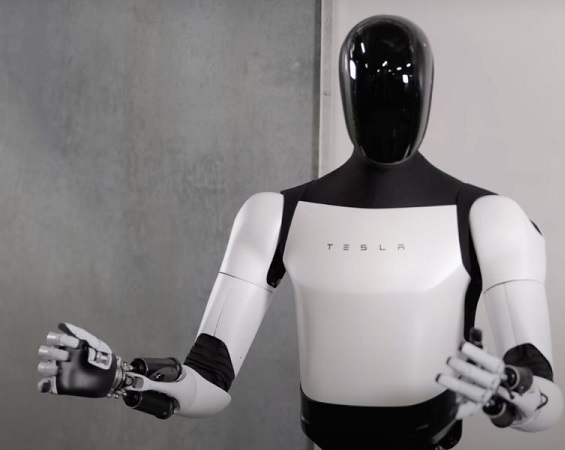
Tesla’s greatest advantage is not mechanical engineering alone. The company’s true strength lies in vertical integration. Optimus benefits from Tesla’s experience in electric drivetrains, battery systems, AI inference hardware, large-scale manufacturing, and computer vision pipelines developed for autonomous driving.
The third-generation Optimus platform demonstrates major improvements in locomotion stability, hand articulation, and object manipulation. Tesla’s latest robotic hands reportedly feature over twenty degrees of freedom, enabling fine motor tasks that many competitors still struggle to execute consistently.
More significant than the hardware itself is Tesla’s manufacturing strategy. Unlike most robotics firms that remain focused on research or small pilot programs, Tesla is aggressively preparing for large-scale production. Internal deployments inside Tesla factories are already being used to train operational workflows and gather real-world robotic interaction data.
Optimus is not yet the most agile humanoid robot in existence, nor is it the most expressive or safest collaborative platform. However, it may become the first humanoid robot designed explicitly for mass industrial adoption at automotive scale.
If Tesla succeeds, Optimus could become the first humanoid robot manufactured in the millions rather than the hundreds.
2. Boston Dynamics Atlas
Atlas remains the benchmark for dynamic mobility in humanoid robotics. Even after more than a decade of public demonstrations, Boston Dynamics continues to lead the industry in whole-body motion control, balance recovery, and highly dynamic movement.
The newest electric version of Atlas marks a major architectural transition away from the earlier hydraulic systems that defined previous generations. Electric actuation provides cleaner operation, improved maintainability, and better suitability for commercial deployment.
What separates Atlas from nearly every competing humanoid is its movement quality. Atlas can sprint, jump, rotate its torso independently during locomotion, recover from destabilizing forces, and manipulate heavy objects while maintaining remarkable balance. The robot’s motion planning system remains one of the most advanced ever demonstrated publicly.
Boston Dynamics has also shifted away from purely theatrical demonstrations toward industrial applications. Hyundai and other enterprise partners are exploring Atlas for repetitive material handling, logistics, and industrial transport workflows.
Atlas is still unlikely to become a mass-market robot due to cost and engineering complexity. Nevertheless, in terms of raw robotics sophistication, no other humanoid currently matches its full-body coordination capabilities.
Atlas represents the high-performance frontier of humanoid robotics.
3. Figure 03
Figure AI has emerged as one of the most serious challengers in the humanoid robotics race. While Tesla attracts headlines and Boston Dynamics dominates engineering prestige, Figure has focused relentlessly on practical industrial deployment.
The company’s Figure 03 platform is designed specifically for labor automation in manufacturing and logistics environments. Unlike many humanoid robots that prioritize spectacle, Figure’s engineering philosophy emphasizes reliability, task execution, and operational efficiency.
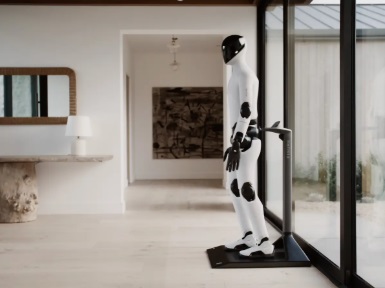
One of Figure’s biggest breakthroughs is its integration of large-scale AI reasoning systems with robotic control architectures. Its Helix platform combines vision, language understanding, and action planning into a unified control stack capable of generalized task execution.
This matters because the future of humanoid robotics is unlikely to depend solely on mechanical capability. The winning platforms will require robots that can interpret instructions, adapt to changing environments, and generalize across unfamiliar tasks without extensive retraining.
Figure robots are already participating in pilot manufacturing operations, including deployments associated with BMW production environments.
In many ways, Figure may currently represent the most balanced combination of advanced AI integration and real-world industrial focus.
4. Unitree G1
No company has disrupted humanoid robotics pricing more aggressively than Unitree Robotics. By 2026, Unitree has become the dominant force behind the commoditization of humanoid hardware.
The G1 platform is especially significant because it dramatically lowers the entry cost for advanced humanoid systems. Compared with Western competitors that often remain prohibitively expensive, Unitree has leveraged China’s manufacturing ecosystem to produce capable humanoid robots at unprecedented prices.
Despite its lower cost, the G1 demonstrates surprisingly advanced mobility. The robot can perform rapid locomotion, dynamic balancing, recovery maneuvers, and even athletic demonstrations such as flips and martial arts routines.
More importantly, Unitree is increasingly becoming the preferred platform for robotics researchers and universities due to affordability and open development support.
Critics correctly point out that Unitree’s AI stack remains less sophisticated than those of Tesla or Figure. Many demonstrations still involve partial teleoperation or carefully constrained environments. However, hardware democratization may ultimately prove just as transformative as AI sophistication.
The G1 has the potential to become the “developer platform” of humanoid robotics.
5. Digit
Agility Robotics’ Digit occupies a unique position in the humanoid robotics landscape. Unlike companies chasing fully anthropomorphic general-purpose robots, Agility has focused on a narrower but commercially valuable goal: logistics automation.
Digit’s design reflects that specialization. The robot lacks the highly human-like proportions of some competitors, but its structure is optimized for warehouse mobility, package handling, and repetitive transport operations.
What makes Digit important is that it already performs useful work in real operational environments. While many humanoid projects remain in pilot phases, Digit has moved closer to routine deployment inside logistics systems.
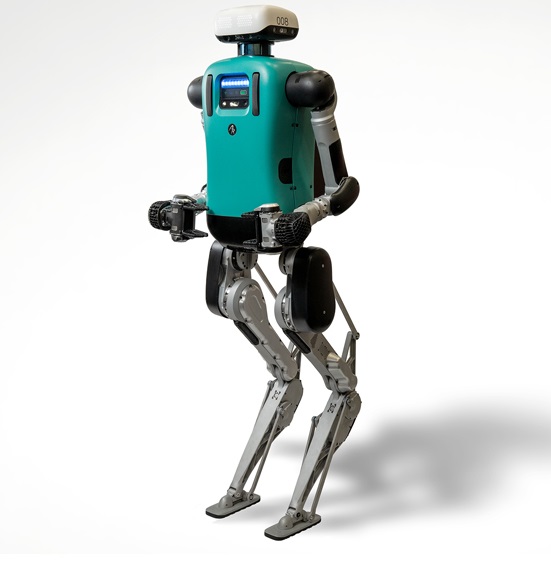
Its efficiency comes from prioritizing practical engineering over human imitation. The robot’s backward-jointed legs, compact torso, and energy-efficient locomotion system are designed around mobility and endurance rather than aesthetics.
Digit may never become a household humanoid assistant. However, it is one of the clearest examples of a humanoid robot solving an economically meaningful problem today rather than promising to solve one tomorrow.
6. Apollo
Apptronik’s Apollo robot represents one of the strongest attempts to build a commercially scalable humanoid designed for safe collaboration with humans.
Apollo emphasizes modularity, maintainability, and industrial practicality. The robot is intended for physically repetitive work in manufacturing, logistics, and warehouse environments where existing infrastructure is already designed around human workers.
One notable aspect of Apollo is its emphasis on human-centered operation. Many humanoid robots still move in ways that appear rigid or mechanically unpredictable. Apollo’s movement system is designed to feel more natural and safer around nearby workers.
Apptronik also benefits from years of robotics development partnerships associated with aerospace and advanced mobility research.
Although Apollo currently receives less media attention than Optimus or Atlas, many robotics professionals consider it one of the most commercially realistic humanoid systems under active development.
7. Ameca
Ameca is fundamentally different from most robots on this list. Developed by Engineered Arts, the platform prioritizes human interaction rather than industrial labor.
Its facial animation system remains the most realistic currently available in a humanoid robot. Subtle eye tracking, microexpressions, lip synchronization, and reactive facial behavior allow Ameca to achieve an unusually convincing level of social presence.
This realism is not merely cosmetic. Human-robot interaction research consistently demonstrates that facial communication significantly affects trust, comfort, and engagement.
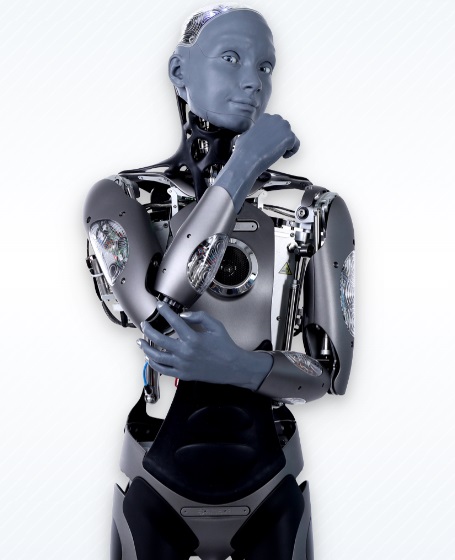
Ameca is therefore highly relevant for applications involving public interaction, education, hospitality, exhibitions, and AI interface research.
Mechanically, Ameca is far less capable than industrial humanoids such as Atlas or Optimus. It is not intended for heavy labor or warehouse automation. However, in the field of social robotics, it remains the industry leader.
If humanoid robots eventually become integrated into everyday human environments, social intelligence and emotional communication may prove just as important as locomotion or strength.
8. UBTECH Walker S
China’s UBTECH Robotics has steadily transformed from an educational robotics company into a serious humanoid robotics competitor. The Walker S platform demonstrates how rapidly Chinese robotics firms are advancing in industrial automation.
Walker S is designed for coordinated industrial operation, including collaborative robotic workflows involving multiple humanoids operating simultaneously.
The robot features advanced balance control, stable bipedal walking, environmental perception, and object manipulation capabilities suitable for structured industrial environments.
UBTECH’s strategic advantage lies in manufacturing scalability and integration with China’s broader robotics supply chain. As China increasingly prioritizes domestic robotics leadership, companies like UBTECH are likely to expand rapidly.
Walker S may not currently dominate Western media coverage, but its long-term industrial significance should not be underestimated.
9. 1X NEO
Norwegian robotics company 1X has taken a very different approach to humanoid robotics. Instead of building highly athletic industrial machines, the company is focused on safe domestic assistance.
NEO is specifically engineered for environments shared directly with humans. The robot’s soft exterior design, quieter motion systems, and lightweight architecture reflect this philosophy.
Unlike industrial humanoids optimized for maximum strength and speed, NEO prioritizes predictability, safety, and natural interaction.
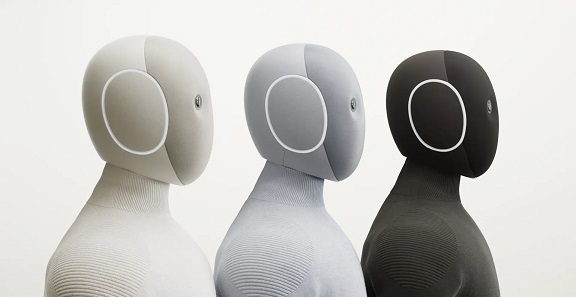
This design strategy may ultimately become essential for home robotics adoption. Many industrial humanoids remain too dangerous, noisy, or mechanically intimidating for domestic environments.
1X has also attracted attention because of its connections to advanced AI research ecosystems and its focus on integrating conversational intelligence with physical robotic capability.
The domestic humanoid market remains highly speculative. However, if consumer robotics eventually becomes viable, NEO represents one of the clearest early attempts to design specifically for that future.
10. Fourier GR-3
Fourier Intelligence originally became known for medical rehabilitation robotics, but its GR-series humanoids have rapidly evolved into one of the most technically interesting platforms in Asia.
The GR-3 focuses heavily on healthcare, assistance, and rehabilitation-oriented applications. Its movement systems prioritize smoothness, compliance, and safe physical interaction.
Healthcare may become one of the most important long-term markets for humanoid robotics due to aging populations and severe labor shortages across many countries.
Unlike logistics robots optimized for warehouses, medical humanoids must safely operate in unpredictable human-centered environments. This requires extremely sophisticated force control and environmental awareness.
Fourier’s expertise in rehabilitation systems gives the company an unusually strong foundation for these applications.
Although the GR-3 receives less public attention than robots from Tesla or Boston Dynamics, it may become highly influential in healthcare robotics over the next decade.
The State of Humanoid Robotics in 2026
The humanoid robotics industry is now entering its first genuinely commercial phase.
For years, the field was dominated by research demonstrations and speculative promises. In 2026, the conversation is changing. Companies are beginning to compete not only on engineering excellence, but also on deployment scale, operating cost, software ecosystems, and manufacturing throughput.
Three major trends define the current landscape.
First, AI is becoming more important than hardware alone. Locomotion is no longer the sole challenge. The real frontier is embodied intelligence: robots capable of understanding language, reasoning about tasks, and adapting dynamically to complex environments.
Second, China is rapidly becoming the manufacturing center of humanoid robotics. Western firms still lead in some areas of AI integration and high-performance control systems, but Chinese companies increasingly dominate hardware affordability and production scale.
Third, the industry is splitting into specialized categories. Some humanoids are optimized for factories. Others target logistics, healthcare, research, or social interaction. The idea of a single universal humanoid robot remains aspirational.
By the summer of 2026, humanoid robotics is no longer science fiction.
It is becoming infrastructure.