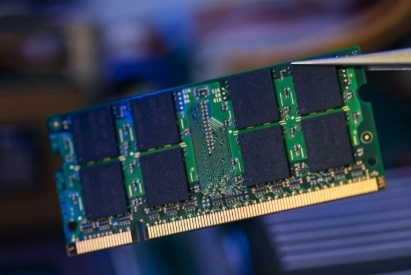
AI Is Consuming the World’s Memory Supply: Why the Semiconductor Industry Is Entering a Permanent Era of Shortages, Rising Costs, and Strategic Tradeoffs
Electronics MemoryFor years, the semiconductor industry operated according to familiar cycles. Demand for DRAM and NAND flash would surge during periods of economic expansion, soften after inventory corrections, and eventually stabilize as manufacturers adjusted output. That pattern has now been fundamentally disrupted. The rise of large-scale artificial intelligence infrastructure has transformed memory from a broadly distributed commodity into one of the most strategically contested resources in the global technology sector.
What began as a rapid expansion in AI accelerator deployments has evolved into a structural reallocation of semiconductor manufacturing capacity. Advanced memory production is increasingly optimized around the needs of hyperscale data centers, leaving other industries struggling to secure supply. Automotive manufacturers, industrial equipment vendors, telecommunications firms, and even consumer electronics producers are now competing for components in a market that no longer prioritizes volume alone, but profitability and strategic value.
The result is an emerging memory shortage that differs sharply from the semiconductor crisis of 2021. The previous disruption was largely logistical. Factory shutdowns during the pandemic, shipping bottlenecks, and sudden swings in consumer demand destabilized supply chains across multiple sectors. The current shortage is more systemic. Semiconductor manufacturers are deliberately redirecting production capacity toward high-bandwidth memory products designed for AI systems, where margins are significantly higher and long-term demand appears more predictable.
At the center of this transformation is the explosive growth of AI compute infrastructure.
The Memory Demands of the AI Economy
Modern AI systems are extraordinarily memory intensive. Training frontier-scale language models requires enormous pools of ultra-fast memory capable of feeding data to GPUs with minimal latency. Traditional DRAM architectures are insufficient for many of these workloads, which is why high-bandwidth memory, or HBM, has become one of the most critical technologies in the semiconductor industry.
Unlike conventional server memory, HBM is vertically stacked and tightly integrated with AI accelerators through advanced packaging technologies such as CoWoS and silicon interposers. This architecture enables extremely high data throughput while reducing power consumption per bit transferred. However, it also makes production substantially more complex.
A single modern AI accelerator may contain tens or even hundreds of gigabytes of HBM. Large GPU clusters deployed by hyperscalers can consume memory volumes that would previously have been associated with entire enterprise sectors. Companies including NVIDIA, Microsoft, Google, Amazon, and Meta are collectively deploying AI infrastructure at a pace that semiconductor supply chains were never designed to support.
The shift is affecting the economics of the entire memory industry. Manufacturers such as Samsung, SK Hynix, and Micron increasingly allocate their most advanced fabrication capacity to HBM and AI-oriented products because these markets deliver far greater returns than conventional automotive or consumer memory. In practical terms, this means that sectors with lower margins are gradually losing priority access to supply.
The memory market is no longer governed primarily by cyclical consumer demand. It is increasingly shaped by AI capital expenditure.
Why the Automotive Industry Is Particularly Vulnerable
The automotive sector illustrates the consequences of this transition more clearly than almost any other industry.
Modern vehicles have evolved into highly distributed computing platforms. Electric vehicles and software-defined architectures rely on centralized processing systems that manage infotainment, navigation, driver monitoring, sensor fusion, connectivity, and increasingly sophisticated autonomous driving functions. These capabilities require substantial memory resources, especially as vehicles incorporate larger displays, real-time operating systems, and AI-assisted decision making.
The memory footprint of a modern premium vehicle is dramatically larger than it was only a few years ago. Advanced driver assistance systems process continuous streams of visual and sensor data, while high-end infotainment platforms increasingly resemble consumer computing environments. Some Level 3 and Level 4 autonomous systems reportedly require hundreds of gigabytes of DRAM capacity for local processing and redundancy.
At the same time, automotive-grade memory cannot simply be replaced with off-the-shelf alternatives. Components used in vehicles must pass rigorous qualification standards related to temperature tolerance, vibration resistance, and long-term reliability. Certification cycles can last years, making rapid supplier substitution nearly impossible during periods of constrained availability.
This creates a structural disadvantage for automakers. They are heavily dependent on memory supply but possess relatively limited leverage within the broader semiconductor ecosystem. Automotive semiconductors represent only a fraction of total global semiconductor demand, while AI infrastructure spending now commands enormous influence over manufacturing priorities.
As AI investment accelerates, the automotive industry increasingly finds itself competing for supply in a market it cannot economically dominate.
Europe’s Regulatory Push Is Increasing Memory Consumption
The pressure on automotive memory demand is being amplified by regulation, particularly in Europe.
The European Union’s General Safety Regulation introduced mandatory advanced safety features for newly sold vehicles, including intelligent speed assistance, lane departure warning systems, emergency braking, and driver monitoring technologies. These systems depend heavily on real-time data processing and local memory resources.
Unlike optional premium features, many of these technologies are now mandatory across broad segments of the market. This changes the nature of automotive memory demand. Memory-intensive systems are no longer limited to luxury vehicles or experimental autonomous platforms. They are becoming standard requirements for mass-market vehicles.
As a result, even manufacturers attempting to reduce costs cannot easily scale back memory consumption without compromising regulatory compliance. This contributes to a broader trend in which baseline semiconductor requirements continue rising despite increasing supply constraints.
The industry now faces an uncomfortable contradiction: regulatory expectations continue moving upward while access to advanced semiconductor resources becomes more restricted.
The Emergence of “Memflation”
One of the most visible consequences of AI-driven supply competition is rapid memory price inflation.
DRAM and NAND pricing have historically fluctuated sharply, but recent increases increasingly reflect structural supply allocation rather than temporary market imbalance. As memory manufacturers prioritize HBM production, conventional memory supply tightens across adjacent sectors. Analysts have begun referring to this phenomenon as “memflation,” a condition in which AI demand indirectly inflates costs throughout the broader semiconductor ecosystem.
For automakers, the implications are significant. Memory is no longer a relatively minor component cost inside increasingly software-centric vehicles. Rising DRAM prices can materially affect the economics of electric vehicles and premium infotainment systems, particularly in highly competitive consumer segments where margins remain limited.
The effects are spreading beyond automotive manufacturing. Enterprise hardware vendors, industrial automation providers, networking equipment suppliers, and edge computing companies are all encountering similar pressures. Many are discovering that supply agreements once considered routine now require long-term commitments, inventory guarantees, or direct strategic partnerships with suppliers.
This represents a broader change in how semiconductor procurement operates. Just-in-time inventory models, long favored for efficiency reasons, are becoming increasingly difficult to sustain in a market defined by chronic competition for advanced components.
Why This Shortage Is Different From 2021
Comparisons to the semiconductor crisis of 2021 are unavoidable, but the similarities are somewhat misleading.
The earlier crisis emerged from extraordinary disruptions caused by the pandemic. Manufacturing interruptions, shipping congestion, sudden spikes in electronics demand, and poor inventory visibility created cascading shortages across industries. Although severe, those conditions were ultimately transitional.
The current memory shortage reflects a different reality. Semiconductor manufacturers are not simply struggling to restore normal operations. They are intentionally prioritizing production toward the most profitable and strategically important technologies.
This distinction matters because it changes the likely duration of the problem.
Even if global semiconductor production expands substantially over the next several years, AI demand may continue consuming new capacity almost as quickly as it becomes available. Hyperscale AI infrastructure remains in an aggressive expansion phase, and memory requirements for next-generation models continue growing rapidly. The economics strongly favor suppliers that optimize around AI workloads rather than conventional markets.
In previous semiconductor downturns, excess capacity eventually stabilized pricing. In the current environment, overbuilding carries considerable financial risk because advanced memory fabrication requires enormous capital expenditure and rapidly evolving process technologies. Manufacturers are therefore expanding cautiously, even while demand remains elevated.
The industry is no longer experiencing a temporary bottleneck. It is adapting to a permanent reprioritization of semiconductor resources.
The Strategic Importance of HBM
Among all memory technologies, HBM has become the clearest symbol of the AI era’s industrial transformation.
HBM production involves highly specialized manufacturing steps, including advanced stacking techniques, through-silicon vias, and complex packaging integration. These processes cannot be scaled as easily as traditional DRAM production. Bottlenecks exist not only in wafer fabrication but also in packaging capacity, testing infrastructure, and substrate availability.
This creates a compounding effect throughout the supply chain. Even when memory dies themselves are available, shortages in advanced packaging technologies can still constrain final output. The semiconductor industry is therefore facing multiple overlapping bottlenecks simultaneously.
HBM also changes the competitive balance between semiconductor firms. Companies capable of delivering integrated AI memory solutions gain disproportionate influence over the future of compute infrastructure. As a result, memory manufacturers are increasingly aligning their long-term investment strategies with AI roadmaps rather than broader semiconductor diversification.
This shift may ultimately reshape the hierarchy of the semiconductor industry itself.
How Automakers and Suppliers Are Responding
Faced with tightening supply conditions, automotive manufacturers are beginning to rethink procurement strategies that dominated the industry for decades.
Several trends are emerging simultaneously:
- Direct sourcing agreements between automakers and semiconductor manufacturers.
- Increased investment in regional semiconductor production capacity.
- Greater use of consumer-grade components in non-critical vehicle systems.
- Architectural consolidation designed to reduce redundant memory usage.
- More aggressive software optimization efforts.
Some manufacturers are also reconsidering the pace at which they introduce advanced autonomous driving features. High-end systems requiring extremely large memory pools may become economically difficult to deploy at scale if component pricing continues rising.
This could lead to a bifurcation of the automotive market. Luxury manufacturers may continue integrating memory-intensive AI features because higher vehicle prices can absorb increased component costs. Mass-market manufacturers, however, may prioritize smartphone integration and cloud-assisted services over expensive onboard compute architectures.
In effect, the AI infrastructure boom may indirectly influence the technological direction of the automotive industry itself.
The Geopolitical Dimension
The memory shortage also carries significant geopolitical implications.
Advanced semiconductor manufacturing remains heavily concentrated in East Asia, particularly in South Korea and Taiwan. As AI systems become strategically important for economic competitiveness and national security, access to memory technologies is increasingly viewed through a geopolitical lens rather than a purely commercial one.
Governments in the United States, Europe, China, Japan, and South Korea are all attempting to strengthen domestic semiconductor ecosystems through subsidies, industrial policy, and strategic investment programs. However, building competitive memory fabrication capacity requires years of development, enormous capital investment, and highly specialized technical expertise.
This means the global economy may remain vulnerable to supply concentration risks for the foreseeable future.
Export controls and technology restrictions further complicate the situation. Restrictions on advanced AI hardware exports influence not only GPU availability but also demand patterns for memory products and packaging technologies. The semiconductor supply chain is becoming more fragmented, more politicized, and more strategically managed.
Rethinking Memory Efficiency
One of the more important long-term consequences of the AI-driven memory crunch may be a renewed focus on efficiency.
For years, abundant memory availability encouraged software bloat across many industries. Automotive platforms, enterprise applications, and consumer operating systems often expanded resource requirements faster than hardware efficiency improved. In a supply-constrained environment, that model becomes increasingly expensive.
Some sectors may therefore be forced to revisit assumptions about redundancy, overhead, and architectural complexity. Zonal vehicle architectures, memory pooling technologies, more efficient inference models, and tighter software optimization could become economically necessary rather than merely desirable.
This shift may eventually produce more disciplined engineering practices across industries that had grown accustomed to relatively inexpensive semiconductor scaling.
Whether that transition occurs quickly enough to offset rising AI demand remains uncertain.
Conclusion
The global memory market is undergoing one of the most important structural transformations in its history. Artificial intelligence has changed the economics of semiconductor manufacturing, redirected investment priorities, and altered the balance of power across multiple industries.
What appears today as a supply shortage is, in many respects, a reordering of technological priorities. AI infrastructure now commands extraordinary influence over how memory is produced, allocated, and priced. Industries that once operated comfortably within stable semiconductor supply chains must now compete in a market increasingly optimized around hyperscale computing.
For automakers, the consequences are immediate: rising costs, constrained supply, and difficult tradeoffs between technological ambition and economic reality. For the broader technology sector, the implications are even larger. Memory is no longer simply another commodity component. It is becoming a strategic resource at the center of the AI economy.
And unlike previous semiconductor disruptions, this transformation is unlikely to reverse once supply catches up. By the time new capacity arrives, AI demand may already have expanded to absorb it.