iSIM Technology Explained: Architecture, Security, Benefits, and IoT Applications
ElectronicsThe subscriber identity module has undergone a remarkable transformation over the past three decades. What began as a removable plastic card has evolved into embedded silicon and, increasingly, into a secure subsystem integrated directly into a device’s system-on-chip.
This latest step is known as the integrated SIM, or iSIM. Instead of placing subscriber identity functionality on a removable SIM card or on a separate eSIM chip, an iSIM incorporates the necessary secure hardware and software into the device’s main silicon platform. The result is a more highly integrated cellular architecture that can reduce component count, save board space, simplify manufacturing, and enable secure remote provisioning.
The technology is particularly relevant to the Internet of Things, where devices may be extremely small, battery-powered, deployed in large numbers, and expected to operate for years without physical maintenance. Connected vehicles, industrial sensors, asset trackers, healthcare equipment, smart meters, and other cellular edge devices are therefore among the most promising applications for iSIM technology.
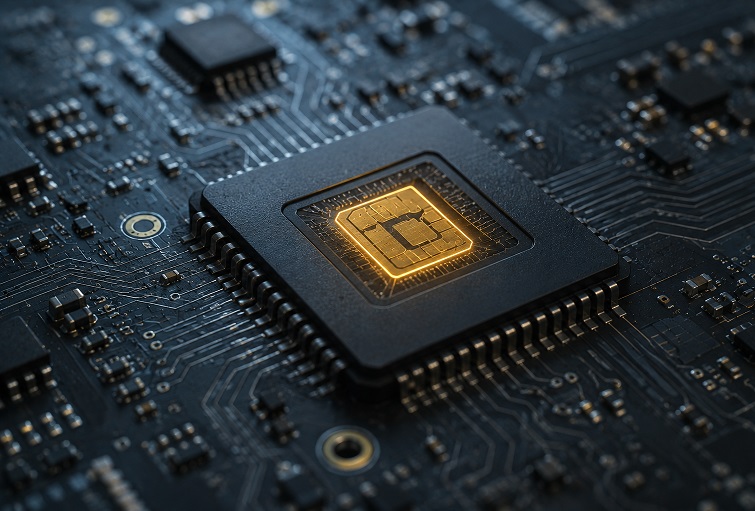
However, iSIM is not simply a smaller version of an eSIM. It changes how subscriber identity functions are implemented at the silicon and system architecture level. Understanding that distinction is essential when evaluating whether iSIM is appropriate for a new embedded product.
From Physical SIM Cards to iSIM
The history of SIM technology is largely a history of integration and miniaturization.
The first commercial SIM cards appeared in the early 1990s in a form factor similar to a conventional credit card. As mobile devices became smaller, the industry introduced progressively smaller formats, including Mini SIM, Micro SIM, and Nano SIM. The reduction in physical dimensions helped manufacturers reclaim valuable space for batteries, displays, antennas, and other components.
The fundamental problem, however, remained unchanged: the SIM was still a separate physical component.
The next major development was the eSIM. Instead of inserting a removable card into a socket, an eSIM is a dedicated secure integrated circuit soldered directly to the device’s PCB. The GSMA standardized the architecture and remote SIM provisioning mechanisms, allowing subscriber profiles to be downloaded and managed electronically.
This eliminated the physical card and made carrier switching and large-scale device provisioning considerably easier.
An iSIM takes integration one step further.
Rather than using a separate eSIM chip, iSIM functionality is incorporated into the cellular SoC or another highly integrated silicon platform. The secure SIM environment therefore becomes part of the processor architecture itself.
This distinction can be summarized as follows:
| Technology | Implementation | Physical SIM slot | Remote provisioning |
|---|---|---|---|
| Traditional SIM | Removable card | Required | No |
| eSIM | Dedicated secure chip on PCB | No | Yes |
| iSIM | Secure SIM subsystem integrated into SoC | No | Yes |
The important point is that iSIM is primarily an architectural evolution rather than simply another physical form factor.
What Is an iSIM?
An iSIM is a hardware and software implementation of subscriber identity functionality integrated into a device’s main silicon platform.
In a conventional cellular device, the modem, application processor, and SIM may exist as separate components. An eSIM removes the removable card but still requires a dedicated secure IC. An iSIM combines the relevant functionality into the SoC, reducing the number of discrete components required by the design.
The secure SIM environment is generally implemented according to the GSMA’s iUICC architecture. An iUICC provides the standardized framework required to execute SIM functionality within a secure environment integrated into the SoC.
This does not mean that subscriber credentials become accessible to the operating system or application processor. Quite the opposite is true. The security architecture is designed to isolate sensitive authentication data and operations from the rest of the device.
A typical iSIM-capable platform can be viewed as several cooperating domains:
- Application or general-purpose processor
- Cellular modem
- Secure execution environment
- SIM or iUICC software stack
- Cryptographic hardware
- Secure memory and key storage
- Provisioning and lifecycle-management mechanisms
The exact implementation varies between silicon vendors, but the basic objective is consistent: cellular identity and authentication must remain protected even if other parts of the device are compromised.
How iSIM Security Works
Security is one of the most important reasons to integrate SIM functionality into a secure SoC environment.
A cellular subscriber profile contains sensitive credentials used for network authentication. These credentials cannot simply be exposed to the application processor, because compromising the operating system should not automatically provide an attacker with access to the subscriber’s cryptographic identity.
An iSIM therefore relies on hardware isolation and a root-of-trust architecture.
A secure subsystem can include dedicated processing resources, protected memory, cryptographic accelerators, and firmware that is isolated from normal application execution. Depending on the silicon platform, technologies such as a Trusted Execution Environment, secure enclave, or tamper-resistant element may be used to provide this separation.
Several security mechanisms can work together:
Secure boot
Secure boot establishes a chain of trust beginning with immutable or otherwise protected root-of-trust code. Each stage verifies the integrity and authenticity of the next stage before allowing it to execute.
This prevents unauthorized firmware from replacing trusted SIM or security components.
Protected key storage
Long-term cryptographic keys and subscriber credentials must be stored in hardware-protected memory or another security boundary that prevents ordinary software from extracting them.
Hardware cryptographic acceleration
Dedicated cryptographic engines can accelerate operations such as AES encryption, hashing, and elliptic-curve cryptography while keeping sensitive intermediate values inside the protected environment.
Isolation from the application processor
The main operating system should not have unrestricted access to the SIM security domain. This separation limits the impact of malware, compromised applications, or vulnerabilities in the main software stack.
Secure lifecycle management
iSIM devices can also incorporate mechanisms for secure provisioning, firmware updates, credential management, and device decommissioning. This is particularly important for IoT deployments where devices may remain in the field for many years.
It is important to understand that iSIM does not make a device invulnerable. Security still depends on the entire hardware and software chain, including the modem, operating system, cloud infrastructure, provisioning platform, and manufacturing process. The value of iSIM is that subscriber credentials and authentication functions can be protected by a hardware security boundary that is considerably harder to tamper with than software-only implementations.
Why iSIM Is Attractive for IoT
The strongest business case for iSIM is not necessarily the smartphone market. It is the rapidly expanding cellular IoT ecosystem.
An IoT manufacturer may need to deploy thousands or millions of devices. Those devices can be tiny, battery-powered, installed in difficult-to-access locations, and expected to operate unattended for years.
Every additional component creates costs and engineering constraints.
A separate SIM socket occupies PCB area, requires mechanical integration, and introduces another potential failure point. Even an eSIM requires a dedicated IC, PCB footprint, assembly process, and associated supply-chain management.
iSIM moves the functionality into silicon that is already present in the system.
This can have several consequences.
Smaller hardware
Removing the SIM socket and potentially eliminating a separate eSIM component frees PCB area. In highly space-constrained products, this can enable smaller enclosures or provide room for larger batteries, sensors, antennas, or other components.
Lower component count
Integrating multiple functions into a single SoC can reduce the bill of materials. It can also simplify PCB design and manufacturing.
Lower power consumption
The power advantage of iSIM is more nuanced than simply saying that the technology “uses less power.” Much depends on the SoC architecture and cellular modem.
However, integrating the secure SIM function into the existing silicon platform can reduce the overhead associated with separate components and communication interfaces. When combined with low-power cellular technologies such as LTE-M and NB-IoT, this architecture can contribute to extremely low-power connected devices.
For battery-operated IoT nodes, even small improvements in sleep and active power can have significant consequences over a device’s operational lifetime.
Simplified logistics
A conventional SIM deployment may require physical cards to be manufactured, transported, inserted, and associated with specific devices.
With iSIM and remote provisioning, the cellular profile can be managed electronically. This is particularly valuable for products that are manufactured in one country and sold globally.
Remote Provisioning and Device Lifecycle Management
One of the most important capabilities associated with eSIM and iSIM technologies is remote SIM provisioning.
Traditional SIM cards require the subscriber profile to be physically present on the card. iSIM removes that constraint.
A device can be manufactured without permanently assigning it to a particular network operator. During deployment, a suitable cellular profile can be provisioned remotely using the appropriate operator and subscription-management infrastructure.
This changes the manufacturing and logistics model.
For example, an IoT company producing a global asset tracker could manufacture a single hardware configuration rather than creating separate SKUs for every cellular market. The appropriate network profile can then be provisioned according to where each device is deployed.
Remote provisioning can be useful for:
- Fleet management
- Global asset tracking
- Industrial equipment
- Smart meters
- Connected medical devices
- Agricultural sensors
- Logistics and supply-chain monitoring
- Connected vehicles
- Remote infrastructure
Lifecycle management is equally important. Enterprise deployments may need to activate, suspend, update, replace, or retire subscriptions without physically accessing the device.
For large IoT fleets, this can significantly reduce operational costs.
iSIM vs eSIM: What Is the Difference?
iSIM and eSIM solve many of the same problems, but their implementation is different.
An eSIM is generally a separate secure integrated circuit soldered onto the PCB. An iSIM integrates equivalent functionality into the SoC.
That means the choice is not simply about functionality. It is also about system architecture, silicon availability, cost, certification, software support, and manufacturing strategy.
| Characteristic | eSIM | iSIM |
| Physical card | No | No |
| Dedicated SIM IC | Yes | No, functionality integrated into SoC |
| PCB footprint | Small but present | Potentially reduced |
| Remote provisioning | Yes | Yes |
| System integration | High | Very high |
| Hardware flexibility | High | Depends on SoC |
| Component count | Higher | Lower |
| Ecosystem maturity | More mature | Still developing |
| Typical adoption | Smartphones, laptops, wearables, IoT | Primarily emerging IoT and integrated cellular platforms |
For many consumer devices, eSIM remains the more practical choice because the technology is mature and widely supported.
iSIM becomes especially interesting when minimizing component count, board area, power consumption, and manufacturing complexity is a priority.
iSIM and Low-Power Cellular Connectivity
The combination of iSIM with LPWAN technologies is particularly attractive for battery-operated IoT products.
LTE-M and NB-IoT were designed for connected devices that typically transmit relatively small amounts of data and spend significant periods in low-power states.
Consider a remote environmental sensor. It might wake periodically, measure temperature and humidity, transmit a small data packet, receive updated configuration information, and return to sleep.
The system does not need the processing performance of a smartphone. It needs:
- Low standby power
- Reliable cellular connectivity
- Secure authentication
- Remote provisioning
- Long battery life
- Small physical dimensions
- Minimal maintenance
An integrated cellular SoC with iSIM functionality fits this type of architecture particularly well.
The real advantage comes from combining technologies rather than treating iSIM as an isolated feature. A highly integrated SoC, efficient modem, low-power firmware, optimized antenna design, and LPWAN connectivity can together produce an IoT device capable of operating for years on a small battery.
Where iSIM Is Likely to Be Used
Industrial IoT
Industrial sensors and controllers can be deployed across factories, warehouses, energy infrastructure, and remote installations.
iSIM simplifies cellular connectivity while reducing the need for physical intervention. Devices can be authenticated and provisioned remotely, which is useful when equipment is distributed across a large geographic area.
Asset tracking
Tracking devices are often installed on containers, vehicles, equipment, and valuable goods. Physical access may be limited, making replaceable SIM cards inconvenient.
An iSIM-based tracker can be manufactured as a compact sealed unit and provisioned remotely.
Connected vehicles
Automotive systems require reliable cellular connectivity for telematics, fleet services, diagnostics, emergency communications, infotainment, and software-enabled services.
Vehicles also have strict requirements for reliability, security, and long operational lifetimes. The high level of integration offered by iSIM can therefore be attractive for future automotive platforms.
Smart meters
Electricity, gas, and water meters may remain in service for many years. Cellular connectivity allows utilities to collect data and manage equipment remotely.
Because replacing a SIM physically can be impractical once a meter is installed, remote provisioning and lifecycle management are valuable capabilities.
Healthcare devices
Portable medical equipment, remote patient monitoring devices, and connected wearables can use cellular connectivity to transmit data without relying on a local Wi-Fi network.
In these applications, security is particularly important because sensitive information may be transmitted over the network.
Wearables and compact electronics
Smartwatches, trackers, and other small devices benefit directly from reduced PCB area and component count. However, consumer adoption depends heavily on SoC availability, operator support, certification, and product economics.
iSIM in Automotive and Industrial Systems
Automotive and industrial applications deserve special attention because they combine several requirements that are difficult to satisfy simultaneously.
A connected vehicle may need cellular connectivity, secure identity, GNSS, sensor processing, local AI, vehicle networking, and cybersecurity functions in a constrained hardware platform.
Similarly, an industrial gateway may need to process sensor data, communicate with a cloud platform, execute local control logic, and maintain secure network connectivity.
Moving more functions into an integrated SoC can reduce the number of external components and shorten communication paths between functional blocks.
This does not automatically make the system better. Highly integrated silicon also creates stronger dependencies on the SoC vendor. The architecture must therefore be evaluated in terms of long-term availability, software support, security updates, certification, and lifecycle management.
Challenges and Limitations
Despite its advantages, iSIM is not universally superior to eSIM or traditional SIM cards.
Limited silicon availability
An iSIM implementation depends on SoCs that support the necessary functionality. This gives manufacturers fewer hardware choices compared with conventional SIMs or eSIMs.
For an OEM, this can create a degree of vendor dependency that needs to be considered during product planning.
Developing ecosystem
The iSIM ecosystem is younger than the conventional SIM and eSIM ecosystems. Hardware support, provisioning services, operator compatibility, development tools, certification processes, and lifecycle-management platforms continue to mature.
Operator support
A technically capable iSIM platform is not sufficient by itself. Cellular operators and subscription-management systems must support the appropriate provisioning architecture.
This is particularly important for global IoT products that need to operate across multiple regions and networks.
Reduced hardware portability
A physical SIM can be removed from one device and inserted into another. An iSIM is inherently associated with the silicon platform in which it is implemented.
That is beneficial for security and integration but can complicate device replacement and certain fleet-management scenarios.
Upfront integration effort
Integrating iSIM functionality into an SoC-based product can require additional engineering work involving security architecture, provisioning, certification, modem integration, and software development.
For low-volume products, the benefits may not justify the additional effort compared with using a mature eSIM solution.
Security remains a system-level problem
Hardware integration can strengthen the protection of subscriber credentials, but it does not eliminate cybersecurity risks.
A compromised application processor, insecure cloud backend, vulnerable provisioning system, or poorly protected device-management interface can still create serious vulnerabilities.
Security must therefore be evaluated across the complete chain from silicon to cloud.
Is iSIM More Secure Than eSIM?
It is tempting to describe iSIM as inherently more secure because it is integrated into the SoC. That conclusion is too simplistic.
Both eSIM and iSIM can use strong hardware isolation, secure boot, cryptographic acceleration, protected key storage, and trusted execution environments.
The principal difference is architectural integration.
With iSIM, the security domain is implemented inside the SoC, potentially allowing tighter hardware integration and a smaller attack surface associated with external interfaces. At the same time, a security vulnerability in a highly integrated SoC can have broader consequences because more functions depend on the same silicon platform.
The security of an iSIM solution therefore depends on the implementation and certification of the particular SoC, not merely on the fact that it is called an iSIM.
What iSIM Means for Device Manufacturers
For an OEM, iSIM should be evaluated as a system-level design decision rather than a replacement for a SIM card.
The relevant questions include:
- Does the selected SoC provide certified iSIM functionality?
- Which cellular operators support the required provisioning model?
- Can the device be provisioned globally?
- How will subscription profiles be managed throughout the product lifecycle?
- What are the requirements for secure boot and firmware updates?
- How will credentials be protected during manufacturing?
- How long will the selected SoC remain available?
- Does the reduction in BOM and PCB area justify the integration effort?
- What happens when a device needs to be replaced?
- Does the product require eSIM flexibility rather than maximum silicon integration?
These questions become particularly important for products expected to remain in production for five, ten, or even fifteen years.
The Future of iSIM
The long-term importance of iSIM is closely tied to the growth of cellular IoT.
As connected devices become smaller and more autonomous, manufacturers are under constant pressure to reduce power consumption, simplify hardware, increase security, and minimize maintenance.
Integrating subscriber identity into the SoC addresses several of these requirements simultaneously.
The technology is unlikely to make eSIM obsolete in the short term. Instead, the two approaches are likely to coexist. eSIM remains highly practical for smartphones, laptops, tablets, wearables, and many embedded systems where the flexibility of a dedicated secure element is useful.
iSIM is particularly compelling when the objective is maximum integration.
As cellular SoCs incorporate more functionality, the boundary between modem, processor, security subsystem, and connectivity controller will continue to disappear. This trend is already visible in modern edge devices, where AI accelerators, security engines, connectivity, memory controllers, and application processors increasingly coexist on a single piece of silicon.
iSIM fits naturally into this broader movement toward system-level integration.
Conclusion
The evolution from physical SIM cards to eSIM and finally to iSIM represents more than a reduction in physical size. It reflects a fundamental change in how cellular identity is implemented and managed within connected devices.
An iSIM integrates subscriber identity functionality into a secure area of the SoC, eliminating the need for a removable SIM card and potentially removing the dedicated eSIM chip as well. This can reduce component count, save PCB space, simplify manufacturing, lower power overhead, and make remote provisioning and lifecycle management easier.
The technology is particularly promising for cellular IoT, asset tracking, industrial equipment, connected vehicles, smart meters, healthcare devices, and other products that must operate autonomously for long periods.
At the same time, iSIM introduces new dependencies on silicon vendors, cellular operators, provisioning platforms, and certification ecosystems. It is therefore not automatically the right choice for every product.
For engineers designing the next generation of connected embedded devices, however, iSIM represents an important architectural option. As cellular connectivity becomes a standard component of edge computing, integrating identity, security, processing, and communications into a single SoC can provide a compelling path toward smaller, more efficient, and easier-to-manage devices.